LG Chem said Wednesday it aims to begin clinical development of a personalized mRNA cancer vaccine in 2029, leveraging artificial intelligence to accelerate drug discovery and identify patients most likely to benefit from treatment.
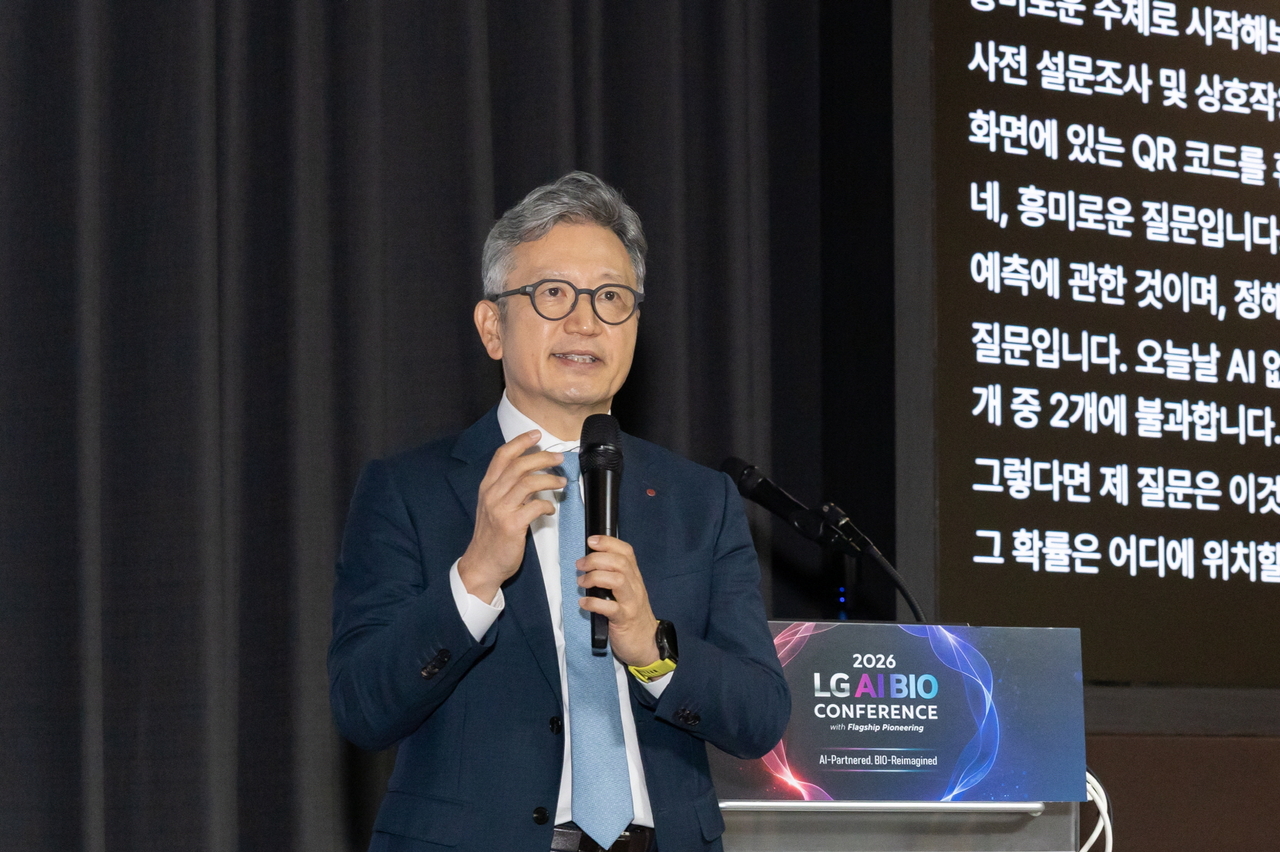
The Korean chemical and pharmaceutical company unveiled its strategy Tuesday at the inaugural LG AI Bio Conference in Seoul, co-hosted with LG AI Research and US biotech venture capital firm Flagship Pioneering.
LG Chem is developing AI models to identify biomarkers that predict treatment responses and help select patients for clinical trials, a key part of its precision oncology strategy.
Its personalized cancer vaccine program uses AI to predict patient-specific neoantigens, which can trigger immune responses against cancer cells. Preclinical testing is planned for 2027, with clinical development targeted for 2029.
"Future competitiveness in drug development depends not only on finding the right drug, but also on identifying the right patient through AI," said Son Jee-woong, president and head of LG Chem's life sciences division.
Flagship Pioneering Asia-Pacific Chair Andre Andonian highlighted AI's expanding role in biotechnology, citing Moderna and Lila Sciences.
Other speakers showcased emerging applications of AI in drug development. Insilico Medicine's Jue Wang discussed a generative AI-discovered drug candidate that advanced to clinical development, while Lila Sciences' Ryan Leung introduced autonomous laboratories where AI agents manage iterative cycles of design, synthesis, experimentation and learning.
During a panel discussion, Inocras co-founder Lee Jeong Seok outlined the use of whole-genome data to identify cancer patients for targeted treatments. Portrai Chief Medical Officer Na Kwon Joong discussed AI-driven biomarker discovery and patient screening using spatial biology, which analyzes how cells are distributed and interact within tissues.
yejinlim@heraldcorp.com